




Microcurrent vs. Gua Sha: Which Tool Is Right for You?
Microcurrent vs. Gua Sha: Which Tool Is Right for You?
Category: Tools & Tech
Introduction
Walk into any beauty conversation right now, and two tools dominate: microcurrent devices and gua sha stones. Both are beloved by estheticians, celebrity skin coaches, and skincare enthusiasts. Both promise a lifted, sculpted face. And both deliver real results. But they work in completely different ways, for different concerns, at different price points, and at different points in your routine. Understanding the difference will save you money and help you choose the tool that actually addresses your specific goals.
What is microcurrent, and how does it work?
Microcurrent technology was originally developed in clinical medicine to treat Bell’s palsy, a condition that causes partial facial paralysis. Doctors discovered that low-level electrical currents, measured in microamperes, could stimulate the muscles and nerves of the face. When applied consistently, these currents increased ATP (adenosine triphosphate) production in cells, accelerating the synthesis of collagen and elastin and reeducating facial muscles to hold a more lifted position.
Today’s at-home microcurrent devices replicate this mechanism in a gentler, consumer-friendly format. You run the device along specific muscle pathways, following a protocol, usually 5 to 10 minutes per session. Results are cumulative. Most people begin noticing a lift in the brow area and cheekbones after 3 to 4 weeks of consistent daily use. The effect has been described as a non-surgical brow lift.
What is gua sha, and how does it work?
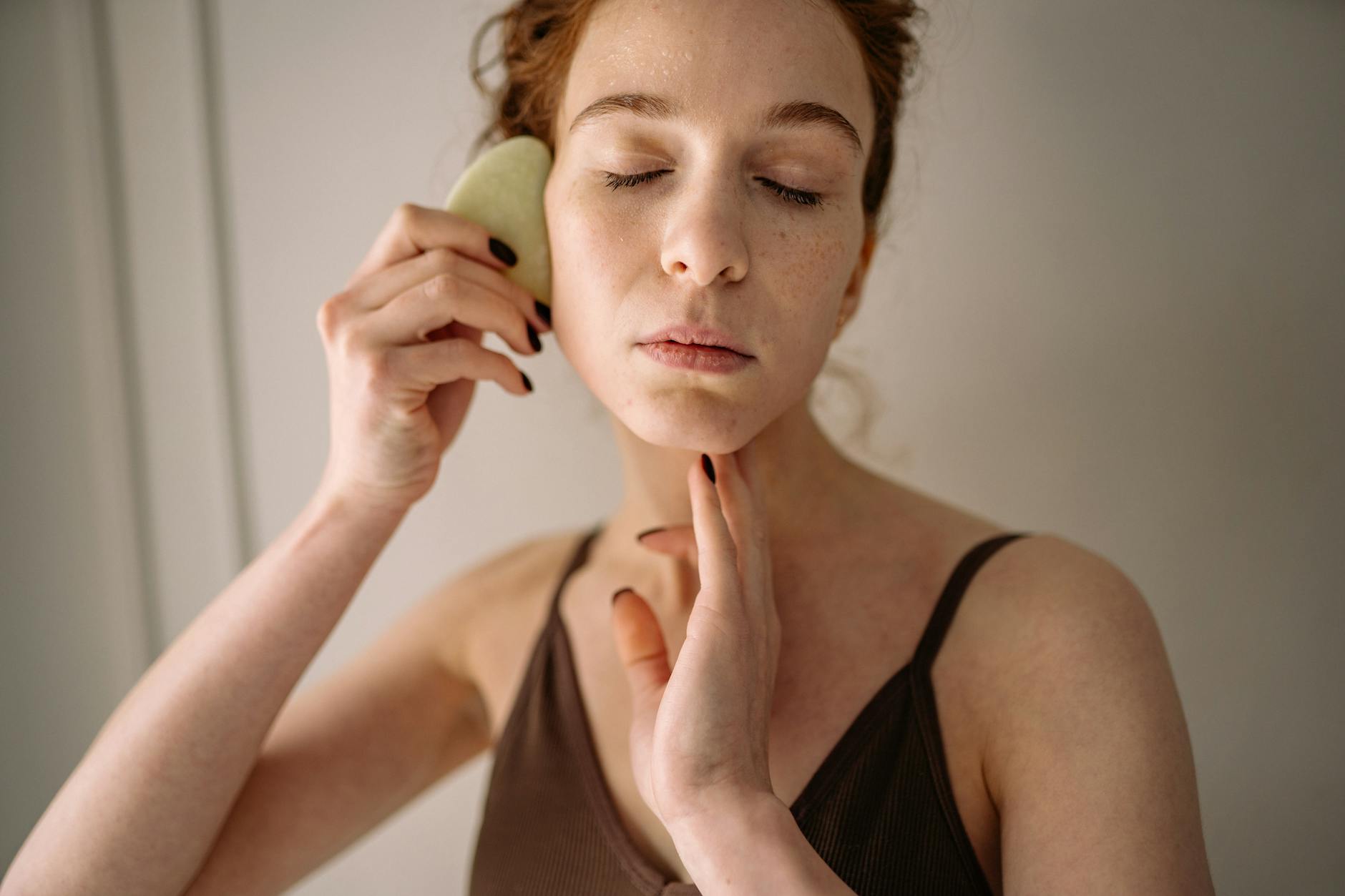
Gua sha has its roots in Traditional Chinese Medicine, where it was used on the body, not just the face, to stimulate circulation, release stagnant energy, and address muscle tension. The facial version is a gentler, more refined adaptation of that technique. Using a flat, smooth stone, typically rose quartz, jade, or bian stone, you apply gentle pressure in upward strokes along facial muscles and lymphatic pathways.
The mechanism is primarily circulatory and lymphatic. Gua sha increases blood flow to the skin, delivering oxygen and nutrients, while simultaneously encouraging lymphatic drainage, which reduces puffiness and removes metabolic waste products from facial tissues. The physical pressure also releases fascia, the connective tissue that wraps your facial muscles, which can hold chronic tension, particularly in the jaw.
Key differences at a glance
- Mechanism: Microcurrent uses electrical stimulation; gua sha uses physical pressure and movement
- Primary benefit: Microcurrent lifts and firms long-term; gua sha depuffs and brightens immediately
- Best for: Microcurrent targets sagging, loss of definition, wrinkles; gua sha targets puffiness, dullness, tension, and lymphatic congestion
- Speed of results: Gua sha shows immediate visible results; microcurrent builds over weeks
- Price range: Microcurrent devices range from $80 to $400+; gua sha stones from $20 to $80
- Session time: Microcurrent typically 5 to 15 minutes with protocol; gua sha 3 to 5 minutes, more intuitive
- Technique difficulty: Microcurrent requires following muscle maps; gua sha is more forgiving to learn
Which one should you choose?
Choose microcurrent if your primary concerns are lifting, firming, loss of facial volume, or deepening lines and wrinkles. It requires more investment, both in money and in consistency, but the structural results are more significant and longer-lasting. Think of it as resistance training for your face.
Choose gua sha if you want an immediate radiance boost, relief from jaw tension and headaches, reduction in morning puffiness, and a grounding ritual that also benefits your mental wellbeing. It is affordable, quick, and flexible enough to use every morning without a strict protocol.
Choose both for comprehensive at-home facial care. Many estheticians recommend using gua sha in the morning for lymphatic drainage and microcurrent in the evening as your targeted treatment. They complement each other beautifully.
Final thoughts
The best tool is the one you use consistently. Both microcurrent and gua sha have strong clinical and anecdotal evidence. Your skin type, goals, budget, and the time you want to invest should guide your decision. Explore both tools in our collection at Stara Beauty USA and read the product descriptions to find the right fit for your routine.