




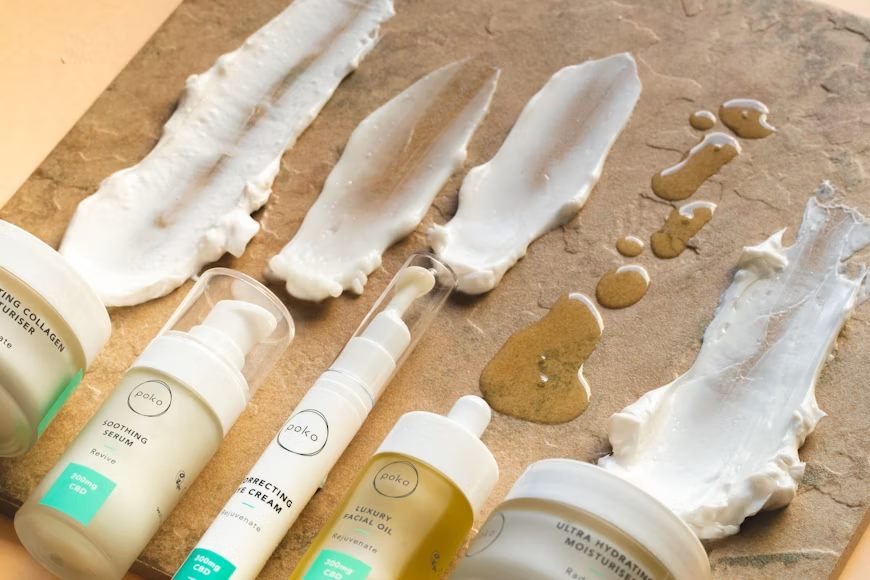
The Complete Skincare Routine Guide: Build Your Best Skin in 2026 (All Skin Types)
Introduction
Makeup can transform your look in minutes. Hair can be styled, woven, or colored to perfection. Nails can be dressed in art. But none of it looks as good — or lasts as long — without healthy skin underneath. A consistent, well-structured **skincare routine** is the foundation upon which all beauty is built.
Understanding Your Skin Type: The Starting Point of Every Skincare Routine
Before choosing a single product, you need to understand your skin type. Using the wrong products for your skin type — even high-quality ones — can cause breakouts, dryness, irritation, or excess oiliness.
The Five Skin Types
1. Normal Skin
Balanced skin that is neither too oily nor too dry. Pores are small, texture is smooth, and breakouts are infrequent. The easiest skin type to care for — the focus is on maintenance and prevention.
2. Dry Skin
Produces less sebum than needed, leading to a tight, flaky, or dull appearance. Fine lines appear more pronounced on dry skin. Needs rich, emollient products that restore and lock in moisture.
3. Oily Skin
Overproduces sebum, leading to shine, enlarged pores, and a higher tendency toward breakouts and blackheads. Needs lightweight, non-comedogenic products that balance oil without stripping the skin.
4. Combination Skin
Oily in the T-zone (forehead, nose, chin) and normal to dry on the cheeks. The most common skin type. Requires a somewhat customized approach — sometimes treating different zones differently.
5. Sensitive Skin
Reacts easily to new products, environmental changes, or irritants — showing redness, stinging, itching, or breakouts. Needs fragrance-free, gentle, minimal-ingredient formulations. Patch testing new products is essential.
How to Determine Your Skin Type
The simplest method: wash your face with a gentle cleanser, pat dry, and do not apply any products. After 30–60 minutes, assess your skin in natural light.
- If it feels tight and looks dull: dry skin
- If it is shiny all over: oily skin
- If the T-zone shines but cheeks feel normal: combination skin
- If it looks balanced with no concerns: normal skin
- If any new product causes redness or irritation: sensitive skin
The Core Skincare Routine: Morning and Evening
Every effective skincare routine follows a fundamental structure. The order of application matters — products should go from thinnest to thickest consistency, allowing each layer to absorb before the next is applied.
Morning Skincare Routine
The goal of your morning routine is to cleanse away overnight oils, hydrate and protect your skin, and create a smooth base for makeup (if worn).
Step 1: Cleanser
Start the morning with a gentle, hydrating cleanser. In the morning, your skin does not need deep cleansing — a light cleanse to remove overnight oils, sweat, and any remaining skincare products is sufficient.
- For dry/sensitive skin: Cream or milk cleansers that do not strip the skin.
- For oily/combination skin: Gel or foaming cleansers that remove excess oil without feeling tight.
Step 2: Toner (Optional but Beneficial)
Toners rebalance the skin’s pH after cleansing and prepare it to absorb subsequent products more effectively. In 2026, the best toners are hydrating and packed with skin-loving ingredients like niacinamide, hyaluronic acid, or botanical extracts.
Apply with clean hands, gently pressing into the skin — not with a cotton pad, which wastes product.
Step 3: Vitamin C Serum
Morning is the ideal time for Vitamin C — a powerful antioxidant that protects against UV damage and environmental pollution, brightens the skin, and fades hyperpigmentation over time.
Apply 3–5 drops to the face and neck, pressing gently into the skin. Allow 30–60 seconds to absorb before the next step.
Step 4: Eye Cream
The skin around the eyes is thinner and more delicate than the rest of the face — it ages first and needs targeted care. Use a lightweight eye cream with ingredients like caffeine (to reduce puffiness), peptides (to firm), or hyaluronic acid (to hydrate).
Apply using your ring finger — the weakest finger — with gentle tapping motions around the orbital bone. Never drag or pull.
Step 5: Moisturizer
Moisturizer is the non-negotiable cornerstone of any skincare routine. It seals in all the layers beneath it, maintains the skin’s moisture barrier, and keeps the complexion soft and supple.
- Dry skin: Rich creams with ceramides, shea butter, or squalane.
- Oily skin: Lightweight gel moisturizers that hydrate without clogging pores.
- Sensitive skin: Fragrance-free, minimal-ingredient moisturizers.
- Normal/combination: Balanced lotions or fluid creams.
Step 6: SPF — The Most Important Anti-Aging Step
Sunscreen is not optional. UV damage is responsible for approximately 80 percent of visible skin aging — wrinkles, dark spots, loss of elasticity, and uneven tone are all accelerated by unprotected sun exposure.
Apply a broad-spectrum SPF 30+ sunscreen every single morning, rain or shine, indoors or outdoors (windows do not block UVA rays). This is the single most impactful anti-aging step you can take for your skin.
According to the American Academy of Dermatology, UV exposure is responsible for most visible signs of skin aging and increases the risk of skin cancer. Daily sunscreen use is the most effective anti‑aging step
Allow SPF to dry fully before applying makeup.
Evening Skincare Routine
The goal of your evening routine is to deeply cleanse, repair, and regenerate. Nighttime is when the skin’s natural repair processes are most active — the right products applied before sleep accelerate this renewal dramatically.
Step 1: Double Cleanse
Double cleansing is one of the most important techniques for anyone who wears makeup, sunscreen, or spends time in polluted environments.
- First cleanse: An oil-based cleanser or micellar water to dissolve makeup, SPF, and surface oils.
- Second cleanse: A gentle water-based cleanser to remove any remaining residue and clean pores.
This two-step process ensures your skin is genuinely clean — not just surface-clean — allowing all subsequent products to penetrate properly.
Step 2: Exfoliator (2–3 Times Per Week)
Exfoliation removes dead skin cells that accumulate on the surface, clogging pores and making skin look dull. In 2026, chemical exfoliants are universally recommended over physical scrubs, which can cause micro-tears in the skin.
- AHA (glycolic acid, lactic acid) — dissolves the bonds between dead skin cells. Best for surface texture, brightening, and anti-aging. Ideal for dry and normal skin.
- BHA (salicylic acid) — penetrates pores to dissolve oil and debris from within. Best for oily, acne-prone, or congested skin.
- PHA (polyhydroxy acids) — gentler exfoliation with larger molecules that do not penetrate as deeply. Ideal for sensitive skin.
Never exfoliate more than three times per week, and always apply after cleansing before any other products.
Step 3: Toner
Same as morning — prepares the skin for serums and locks in moisture.
Step 4: Treatment Serum — Retinol, Niacinamide, or Peptides
Evening is the ideal time for your most powerful active ingredients.
Retinol: The gold standard of anti-aging skincare. A form of Vitamin A that accelerates cell turnover, reduces fine lines and wrinkles, fades dark spots, and prevents new acne from forming. Start with a low concentration (0.025–0.05%) two to three times per week, gradually increasing frequency as your skin builds tolerance. Always use SPF the following morning.
Niacinamide (Vitamin B3): A multi-tasking powerhouse — regulates oil production, minimizes pore appearance, fades hyperpigmentation, strengthens the skin barrier, and reduces inflammation. Safe for all skin types and can be used morning and evening.
Peptides: Short chains of amino acids that signal the skin to produce more collagen. Ideal for mature skin or anyone concerned with firmness and elasticity.
Hyaluronic Acid: Not technically a “treatment” ingredient — it simply attracts and holds water in the skin. Apply to slightly damp skin for maximum hydration benefit.
Step 5: Eye Cream
Use a slightly richer eye cream in the evening — look for peptides, retinol alternatives (bakuchiol), or collagen-supporting ingredients.
Step 6: Face Oil (Optional)
Face oils seal in moisture and provide concentrated nourishment. Popular options include rosehip oil (for brightening and scarring), marula oil (lightweight and fast-absorbing), squalane (balancing for all skin types), and argan oil (nourishing for dry skin).
Apply as the second-to-last step in your evening routine, before your moisturizer.
Step 7: Night Cream or Sleeping Mask
Night creams are richer than daytime moisturizers and contain higher concentrations of repair and regeneration ingredients. A weekly sleeping mask provides an intense moisture surge overnight.
Key Skincare Ingredients Decoded
Understanding ingredients helps you shop smarter and build a more effective routine.
| Ingredient | Best For | Skin Type | When to Use |
|---|---|---|---|
| Hyaluronic Acid | Deep hydration | All skin types | AM + PM |
| Vitamin C | Brightening, antioxidant protection | All skin types | AM |
| Retinol | Anti-aging, acne, cell turnover | Most (start slowly) | PM only |
| Niacinamide | Pores, oiliness, brightening | All skin types | AM + PM |
| Glycolic Acid | Exfoliation, texture | Normal, dry, mature | PM (2–3x/week) |
| Salicylic Acid | Acne, oiliness, blackheads | Oily, acne-prone | PM (2–3x/week) |
| Ceramides | Barrier repair, moisture | Dry, sensitive | AM + PM |
| Peptides | Firming, anti-aging | All skin types | AM + PM |
| SPF | UV protection (non-negotiable) | All skin types | AM (daily) |
| Bakuchiol | Gentle retinol alternative | Sensitive skin | AM + PM |
Skincare Mistakes to Avoid
Even well-intentioned skincare routines can cause harm when common mistakes are made.
1. Over-exfoliating. Exfoliating daily strips the skin barrier, leading to redness, sensitivity, and breakouts. Stick to 2–3 times per week maximum.
2. Skipping SPF. No skincare routine is complete without daily sun protection. UV damage undoes every investment you make in skincare products.
3. Introducing too many new products at once. When you introduce multiple new products simultaneously, you cannot identify what is causing a reaction. Add one new product at a time, waiting one to two weeks between additions.
4. Using products in the wrong order. Skincare goes from lightest to heaviest. Applying a thick cream before a serum prevents the serum from penetrating.
5. Neglecting the neck and chest. The skin on your neck and décolletage shows age just as quickly as your face — extend all products downward.
6. Using hot water to cleanse. Hot water strips natural oils from the skin. Use lukewarm water instead.
7. Not patch testing new products. Always patch test on the inside of your wrist or behind your ear before applying a new product to your face, especially if you have sensitive skin.
8. Sleeping in makeup. Makeup left on overnight clogs pores, causes breakouts, and accelerates skin aging. Double cleanse every night without exception.
Targeted Skincare for Specific Concerns
For Hyperpigmentation and Dark Spots
Focus on: Vitamin C (morning), niacinamide (morning and evening), alpha arbutin, tranexamic acid, AHA exfoliation (2x/week), and consistent SPF use.
For Acne-Prone Skin
Focus on: salicylic acid cleanser, niacinamide serum, oil-free non-comedogenic moisturizer, spot treatments with benzoyl peroxide or tea tree, and a gel SPF.
For Anti-Aging
Focus on: Vitamin C (morning), retinol (evening), peptides, SPF, and a rich moisturizer with ceramides and hyaluronic acid.
For Dehydrated Skin (Any Skin Type)
Focus on: hydrating toner, hyaluronic acid serum applied to damp skin, and a moisturizer with occlusives (like squalane or shea butter) to seal moisture in.
For Sensitive Skin
Focus on: fragrance-free everything, gentle pH-balanced cleanser, barrier-repairing ceramide moisturizer, mineral SPF, and minimal ingredients. Introduce actives (if at all) slowly and at low concentrations.
Building Your Skincare Routine: A Practical Timeline
Week 1–2: Establish Your Base
Cleanser → Moisturizer → SPF (AM) | Cleanser → Moisturizer (PM)
Week 3–4: Add a Serum
Introduce Vitamin C in the morning or hyaluronic acid in the evening.
Week 5–6: Add an Exfoliant
Introduce a chemical exfoliant 1–2 times per week in the evening routine.
Week 7–8: Add Your Treatment
Introduce retinol or niacinamide into the evening routine.
Ongoing: Refine and Adjust
Seasonal changes affect skin behavior — you may need a richer moisturizer in winter and a lighter one in summer. Listen to your skin and adjust accordingly.
Lifestyle Factors That Impact Your Skin
No skincare product can fully compensate for lifestyle factors that undermine skin health. For genuinely great skin, consider:
- Hydration: Drink at least 8 glasses of water daily. Hydrated skin is plumper, more resilient, and more radiant.
- Sleep: 7–9 hours of quality sleep is when skin regeneration peaks. Chronic sleep deprivation shows immediately in the skin.
- Nutrition: Antioxidant-rich foods (berries, leafy greens, nuts) protect skin from free radical damage. Reduce excess sugar, which contributes to premature aging via glycation.
- Stress management: Chronic stress elevates cortisol, which triggers breakouts, increases inflammation, and impairs the skin barrier.
- Exercise: Increases circulation, delivering oxygen and nutrients to skin cells and giving a natural, healthy glow.
- Pillowcase hygiene: Change your pillowcase at least twice a week. Bacteria and oils that accumulate on pillowcases transfer directly to your skin.
Why StarabeautyUSA for Your Skincare Needs?
At StarabeautyUSA, we have built our Skincare category around products that truly deliver — premium formulations selected for efficacy, safety, and results. We believe skincare should be a joy, not a chore, which is why we stock products that work seamlessly together and feel luxurious to use every single day.
With worldwide shipping, 30-day returns, and 24/7 customer support, we make it easy to invest in the skincare your skin deserves.
Frequently Asked Questions About Skincare Routines
How long before I see results from a new skincare routine?
Most skincare ingredients need 4–12 weeks of consistent use to show visible results. Patience and consistency are the most important factors in skincare.
Can I use Vitamin C and retinol together?
It is generally recommended to use Vitamin C in the morning and retinol in the evening to avoid potential irritation and maximize each ingredient’s effectiveness.
Do I need a different skincare routine for summer and winter?
Often, yes. In winter, you may need a richer moisturizer and less exfoliation. In summer, a lighter moisturizer and higher SPF are ideal.
Is natural skincare better than synthetic skincare?
Not necessarily. “Natural” and “synthetic” are not reliable indicators of safety or efficacy. What matters is the ingredient’s function, concentration, and how your skin responds.
At what age should I start using anti-aging skincare?
Prevention is far more effective than correction. Starting with SPF and antioxidants in your twenties is ideal. Retinol can be introduced in the mid-to-late twenties for preventive anti-aging.
Conclusion: Consistency Is the Secret to Great Skin
A great skincare routine is not about having the most products or spending the most money. It is about understanding your skin, choosing the right products for your specific needs, applying them in the right order, and — above all — being consistent.
Skin is a living organ that responds to the care you give it over time. Every morning cleanse, every evening retinol, every daily sunscreen application compounds into real, visible, lasting results. The journey to your best skin is measured in weeks and months, not days.
Start simple. Be consistent. Trust the process.
Discover our full [Skincare collection](https://starabeautyusa.com/product-category/skincare/) at StarabeautyUSA and find the premium products your skin has been waiting for.
Published by StarabeautyUSA | Premium Beauty Tools & Skincare | Worldwide Shipping Available
2 thoughts on “The Complete Skincare Routine Guide: Build Your Best Skin in 2026 (All Skin Types)”
well put and quite informative
Pingback: Gel Nails at Home: Perfect 2026 Guide | StarabeautyUSA