


The Complete Face Mask Guide: Best Face Masks for Every Skin Type and Concern (2026)
Category: Skin Care |
Published by StarabeautyUSA | Premium Skincare | Worldwide Shipping Available
Introduction: Why Face Masks Are the Most Powerful Weekly Skincare Upgrade
Your daily skincare routine handles the fundamentals: cleansing, toning, moisturizing, and protecting. But once or twice a week, applying the best face mask for your skin type delivers a concentrated dose of active ingredients that your regular routine cannot match in volume or intensity.
Face masks work by creating occlusion — a temporary barrier that forces ingredients deeper into the skin while preventing evaporation. The result is accelerated delivery of actives, faster treatment outcomes, and a level of skin transformation that daily products build toward over weeks, but masks can visibly accelerate in a single session.
The global face mask market exceeded $10 billion in 2025 and continues to grow, driven by increasing consumer sophistication about skincare ingredients and a growing culture of at-home spa rituals. The challenge is choice: with hundreds of mask types, formulas, and brands available, knowing which face mask is right for your skin type is the essential starting point.
This guide walks through every major face mask type, the key ingredients to look for by concern, how to build an effective masking routine, and where to find premium face masks. Explore our face mask collection at StarabeautyUSA — curated for every skin type and concern.
Best Face Mask Types: What Each Format Does
1. Clay and Mud Masks
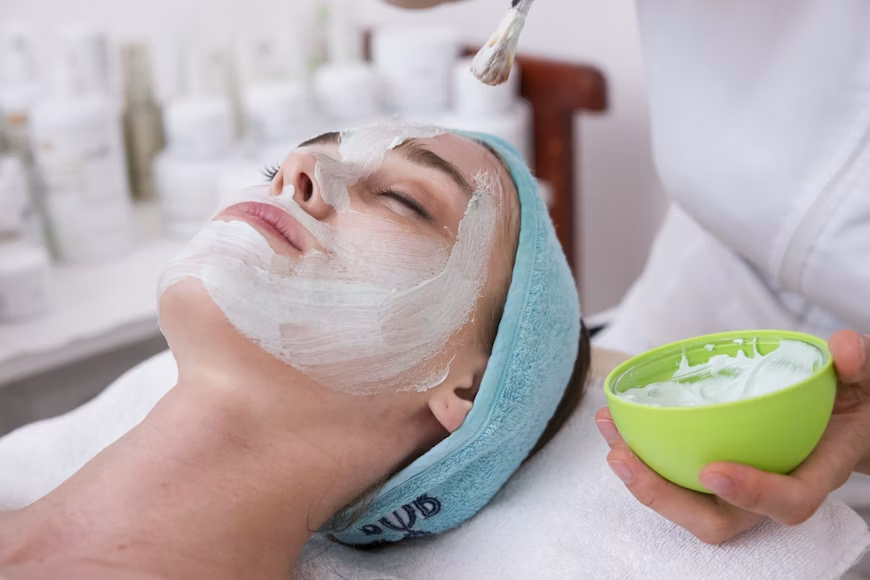
Clay masks use mineral-rich clays — kaolin, bentonite, French green clay, and rhassoul clay — to draw out excess oil, unclog pores, and remove impurities from the skin’s surface. They work through adsorption: the clay attracts and binds to sebum, debris, and surface bacteria as it dries.
Clay masks feel tightening as they dry and are typically rinsed off after 10 to 20 minutes. When overused, they can strip the skin barrier, so they are best used one to two times per week — never daily.
Best for: Oily and combination skin, enlarged pores, blackheads, congested skin, and acne-prone skin.
Key ingredients to look for: Kaolin clay (gentlest), bentonite clay (most absorptive), charcoal (enhanced detoxification), tea tree (antibacterial). Clay masks use mineral‑rich clays to draw out excess oil, see American Academy of Dermatology (aad.org in Bing).
2. Sheet Masks
Sheet masks consist of a fiber or hydrogel sheet saturated with a concentrated serum. They are applied directly to the face and left on for 15 to 25 minutes, during which the occlusion of the sheet forces the serum to penetrate the skin rather than evaporating.
Sheet masks are typically single-use and deliver an immediate visible result — plumper, brighter, more hydrated skin — making them a staple for pre-event skin prep. They are also among the gentlest mask types, suitable for all skin types, including sensitive.
Best for: Dehydrated skin, pre-event prep, sensitive skin, all skin types.
Key ingredients to look for: Hyaluronic acid (deep hydration), niacinamide (brightening and pore-minimizing), Vitamin C (antioxidant and brightening), ceramides (barrier repair), collagen peptides (firming).
3. Sleeping Masks (Overnight Masks)
Sleeping masks — also called overnight masks or sleeping packs — are applied as the final step of an evening routine and left on until morning. They create an occlusive barrier that seals in all the products applied beneath them, amplifying their effects and delivering intense hydration and repair while you sleep.
Unlike clay masks, sleeping masks do not dry down — they are formulated to be comfortable overnight and rinse off easily in the morning. Some advanced formulas include retinol, peptides, or brightening actives that work synergistically with the skin’s natural nighttime repair processes.
Best for: Dry and dehydrated skin, mature skin, and anyone wanting to maximize their evening routine.
Key ingredients to look for: Hyaluronic acid, ceramides, peptides, bakuchiol (retinol alternative), botanical extracts like aloe and centella asiatica.
4. Exfoliating Masks (AHA/BHA Masks)
Exfoliating masks use chemical exfoliants — alpha-hydroxy acids (AHA) like glycolic (Paula’s Choice Skincare Science) or lactic acid, or beta-hydroxy acids (BHA) like salicylic acid — to dissolve the bonds between dead skin cells and speed cellular turnover.
These are among the most results-driven mask types. Used consistently, they visibly improve texture, reduce hyperpigmentation, minimize the appearance of pores, and reveal brighter, smoother skin. Start slowly — once a week — and always apply SPF the following morning.
Best for: Dull skin, textural irregularities, hyperpigmentation, oily and acne-prone skin, rough skin.
Key ingredients to look for: Glycolic acid (most effective for anti-aging), lactic acid (gentler, more hydrating), salicylic acid (best for congested/oily skin), mandelic acid (gentle, large-molecule AHA suitable for sensitive skin).
5. Hydrogel Masks
Hydrogel masks use a gel polymer sheet instead of fiber, delivering an even higher concentration of active ingredients due to better skin contact. They are cooling, soothing, and intensely hydrating. A popular sub-category is the hydrogel eye mask — targeted patches applied under the eyes to address dark circles, puffiness, and fine lines. Our EELHOE Chlorella Vera Hydrogel Eye Mask is a customer favourite in this category.
Best for: Dehydrated skin, sensitive skin, anti-aging, eye area concerns, post-treatment recovery.
6. Peel-Off Masks
Peel-off masks dry to a film that is literally peeled from the face, physically removing surface dead skin cells and surface debris as it comes off. They give a satisfying tactile result and temporarily smooth skin texture.
Important note: Avoid aggressive peel-off masks on sensitive skin or around delicate eye and lip areas, as peeling can stress the skin. Look for hydrating peel-off formulas rather than harsh rubber or charcoal types.
Best for: Normal to oily skin, surface-level texture, single-use pore cleansing.
The Best Face Mask for Every Skin Concern: A Complete Reference Guide
For Acne and Oily Skin
The best face mask for acne and oily skin combines oil absorption with antibacterial action and pore‑tightening properties. For oily or congested skin, the best face mask option is a clay formula with bentonite or kaolin blended with salicylic acid or tea tree. Use it once or twice weekly to prevent breakouts without stripping moisture. Always follow with a lightweight, oil‑free moisturizer to balance hydration.
Key Ingredients: Sulfur (reduces acne‑causing bacteria), zinc (sebum control), niacinamide (pore‑minimizing), willow bark extract (natural salicylate).
The best face mask for acne and oily skin combines oil absorption with antibacterial action and pore-tightening properties.
- Primary choice: Clay mask with bentonite or kaolin + salicylic acid or tea tree
- Use frequency: 1 to 2 times per week, maximum
- Follow with: Oil-free, non-comedogenic moisturizer (never skip moisturizer after a clay mask)
- Key ingredients: Sulfur (reduces acne-causing bacteria), zinc (sebum control), niacinamide (pore-minimizing), willow bark extract (natural salicylate)
Common mistake: Over-masking with clay on oily skin leads to dehydration, which triggers even more oil production. Once or twice weekly is sufficient.
For Dry and Dehydrated Skin
The best face mask for dry skin needs masks that replenish moisture and repair the barrier — not clay or exfoliating formulas that can further strip hydration.
- Primary choice: Sleeping mask or hydrating sheet mask with hyaluronic acid and ceramides
- Use frequency: 2 to 3 times per week
- Follow with: Rich moisturizer to seal in mask benefits
- Key ingredients: Hyaluronic acid (multiple molecular weights for surface and deep hydration), ceramides (barrier restoration), squalane (occlusive moisture), shea butter, glycerin
For Dull and Uneven Skin Tone
Dullness is typically caused by the accumulation of dead skin cells, congestion, and reduced cell turnover. Consistent use of the best face mask brightens tone and restores radiance.
- Primary choice: AHA exfoliating mask (glycolic or lactic acid) or brightening sheet mask with Vitamin C
- Use frequency: Once weekly (AHA mask); 2 to 3 times weekly (sheet mask)
- Key ingredients: Glycolic acid, lactic acid, Vitamin C, kojic acid, arbutin, niacinamide, turmeric extract
For Sensitive and Reactive Skin
The best face mask for sensitive skin is gentle, calming, and barrier‑repairing. The priority is always calming and barrier repair rather than active treatment.
- Primary choice: Hydrogel sheet mask or gentle sleeping mask with centella asiatica or oat extract
- Use frequency: 1 to 2 times per week
- Avoid: AHA/BHA masks, clay masks, fragrance, alcohol-based formulas
- Key ingredients: Centella asiatica (cica), allantoin, oat extract, aloe vera, bisabolol, panthenol (Vitamin B5)
For Anti-Aging and Mature Skin
Mature skin benefits most from masks that stimulate collagen production, deliver deep moisture, and accelerate cell renewal.
- Primary choice: Sleeping mask with peptides + weekly exfoliating mask (lactic acid is gentler for mature, drier skin)
- Use frequency: Sleeping mask 2 to 3 times weekly; exfoliating mask once weekly
- Key ingredients: Retinol or bakuchiol (cell turnover), peptides (collagen stimulation), hyaluronic acid, resveratrol (antioxidant), Vitamin C, coenzyme Q10
For Congested Skin and Blackheads
Congestion — blocked pores, blackheads, closed comedones — requires a combination of oil control and pore-penetrating actives.
- Primary choice: Charcoal clay mask or BHA (salicylic acid) exfoliating mask
- Use frequency: Once weekly
- Follow with: Oil-free moisturizer + niacinamide serum to minimize pore appearance
- Key ingredients: Activated charcoal, bentonite clay, salicylic acid, green tea extract, zinc
Explore our bamboo charcoal deep cleaning facial mask — an excellent choice for deep pore cleansing and oil control.
How to Build a Weekly Face Mask Routine That Delivers Results
One of the most powerful approaches to masking is a multi-mask routine — using different masks on different days (or different zones of the face) to address multiple concerns simultaneously.
Sample Weekly Masking Schedule
- Monday evening: Exfoliating AHA or BHA mask — brighten and resurface after the weekend
- Wednesday evening: Hydrating sheet mask — mid-week moisture replenishment
- Friday evening: Clay mask (if oily/congested) or sleeping mask (if dry/mature) — weekend deep treatment
- Sunday evening: Hydrating sleeping mask — prepare skin for the week ahead
This rotation addresses multiple concerns without overloading the skin with actives on consecutive days.
Multi-Masking by Zone
Multi-masking applies different mask formulas to different facial zones simultaneously, targeting the specific concerns of each area:
- T-zone (oily/congested): Clay or charcoal mask on forehead and nose
- Cheeks (dry or sensitive): Hydrating sheet mask piece or gentle sleeping mask
- Under-eye area: Hydrogel eye patches for targeted de-puffing and hydration
- Chin (acne-prone): Spot application of clay mask
Face Mask Application Tips for Maximum Results
- Always apply masks to cleansed skin — product residue and daily buildup prevent ingredients from penetrating
- Use a clean mask brush or silicone applicator for hygiene and even coverage
- Never apply clay masks to cracked or severely dry skin — they can cause irritation
- After removing a sheet mask, press the remaining serum into the skin rather than washing it off
- Rinse off masks with lukewarm water — hot water strips the barrier; cold water does not fully remove residue
- Follow every mask with moisturizer — masks are a treatment step, not a replacement for hydration
- Never leave a clay mask on until it cracks completely — remove while still slightly damp to avoid over-drying
- Time your masks during relaxation to reduce the cortisol (stress hormone) that can trigger breakouts
Face Mask Ingredients to Look For — and to Avoid
Powerhouse Ingredients to Seek Out
- Hyaluronic acid — holds up to 1,000 times its weight in water; the ultimate hydrator
- Niacinamide — regulates oil, minimizes pores, brightens, and strengthens the barrier
- Glycolic acid — the most researched AHA; proven for brightening and anti-aging
- Salicylic acid — the gold standard for oily and acne-prone skin
- Centella asiatica (cica) — deeply soothing and barrier-repairing; ideal for sensitive skin
- Kaolin clay — the gentlest clay; ideal for those new to clay masking or with combination skin
- Vitamin C (L-ascorbic acid) — potent brightening antioxidant
- Peptides — signal skin to produce more collagen; ideal for anti-aging masks
Ingredients to Avoid on Sensitive or Dry Skin
- Fragrance (parfum) — a leading cause of contact dermatitis and irritation
- Alcohol (denatured alcohol / SD alcohol) — drying and barrier-disrupting
- Menthol and eucalyptus — create a cooling sensation but are irritating to the skin barrier
- Bentonite clay in excess — highly absorptive; overuse strips moisture from dry and sensitive skin
- Physical exfoliants (walnut shell, sugar, apricot kernel) — can cause micro-tears in delicate skin
Frequently Asked Questions About Face Masks
How often should I use a face mask?
It depends on the mask type. Clay and exfoliating masks: one to two times per week. Sheet masks and hydrating masks: two to four times per week. Sleeping masks: two to three times per week. Never use any single mask formula daily unless it is a very gentle hydrating formula.
Can I use a face mask every day?
Not recommended for most mask types, especially clay or exfoliating formulas. Daily masking with active formulas leads to over-exfoliation, barrier damage, and increased sensitivity. A gentle hydrating sleeping mask is the only format suitable for very frequent use.
Should I apply a face mask before or after serum?
Most masks are applied after cleansing and before serum and moisturizer, because they deliver concentrated actives directly to clean skin. Sleeping masks are the exception — they go on last, as the final seal over your full evening routine.
What is the best face mask for glowing skin?
For an immediate glow, a brightening sheet mask with Vitamin C or niacinamide applied the evening before an event delivers instant luminosity. For longer-term glow, a weekly AHA exfoliating mask used consistently over four to eight weeks visibly transforms skin radiance.
Conclusion: Make Face Masks a Non-Negotiable Part of Your Skincare Routine
Face masks are not a luxury add-on. They are a targeted, concentrated, clinically supported tool for skin health — and when used strategically, they accelerate the results of your entire skincare routine.
The key is matching the right mask to your skin type and current concern, using it at the right frequency, and pairing it with a consistent daily routine. A $25 sheet mask used correctly twice a week will deliver more visible results than a $150 serum used haphazardly. Making the best face mask part of your weekly routine ensures faster, visible results and elevates your skincare game.
Explore our full face mask collection at StarabeautyUSA — including our fan-favourite Bamboo Charcoal Deep Cleaning Mask and EELHOE Chlorella Vera Hydrogel Eye Mask. Premium skincare that delivers.
Related Reading:
• The Complete Skincare Routine Guide 2026
• Best Skincare Routine for Glowing Skin
• Evening Skincare Routine: 5 Reasons It Matters More Than Morning
Published by StarabeautyUSA | Expert Beauty Tips for Nails, Hair, Makeup & Skincare | Shop now | Worldwide Shipping Available
3 thoughts on “The Complete Face Mask Guide: Best Face Masks for Every Skin Type and Concern (2026)”
well articulated…
this is very informative.
Love how this post highlights both acne‑fighting and hydrating options. It’s super helpful for anyone trying to build a balanced skincare routine at home.